About Sief Ali
A student developer exploring computing from microcontrollers and firmware to full-stack applications.
I am an ambitious student developer driven by curiosity about how computing systems operate at every layer. Rather than specializing exclusively in high-level web interfaces or isolated low-level firmware, I build across both worlds.
My journey spans writing low-level C firmware for 8-bit and 32-bit microcontrollers (ATmega32, ESP32), designing layered MCAL and HAL architectures with FreeRTOS, all the way to engineering typed TypeScript backends, realtime communication pipelines, and full-stack web applications with Next.js.
In embedded systems, I focus on clean abstraction boundaries, deterministic timing, peripheral interfacing (ADC, Timers, UART, Interrupts), and state machines. In software and web engineering, I build robust REST/WebSocket APIs, relational databases, CLI adapters, and intuitive user interfaces.
As a student participating in Egypt's top technology initiatives like DECI (Digital Egypt Cubs Initiative), I continuously study core engineering principles, build real projects, and hold myself to high software craft standards.
I do not view myself as a senior software engineer or claim decades of commercial experience. Instead, I am an enthusiastic and dedicated student engineer who enjoys tackling challenging problems, studying foundational computer science and electrical engineering concepts, and applying them in actual working implementations.
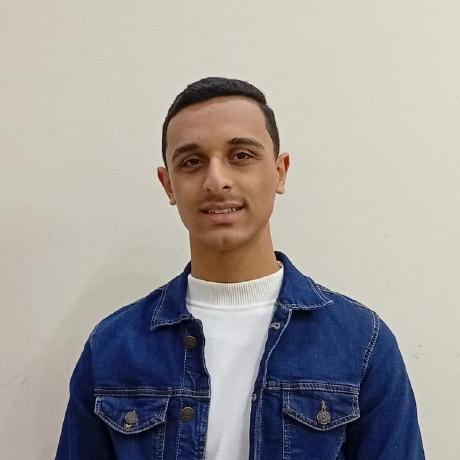
Sief Ali
Embedded & Full-Stack Developer
Egypt
How I Approach Engineering
Down to the Hardware
I appreciate understanding registers, timer clocks, ADC sampling times, and interrupt vectors. Writing bare-metal and FreeRTOS firmware teaches resource conservation and deterministic execution.
Disciplined Architectures
Whether separating MCAL and HAL layers in Embedded C or decoupling database persistence from realtime WebSocket streams, clear abstraction boundaries keep codebases maintainable.
Product-Minded Usability
Software only provides value when real people can use it comfortably. Projects like Madarek reflect my commitment to clean user flows, localized typography, and responsive design.
Technical Competencies
Embedded Systems & Firmware
- ▹Microcontrollers: ATmega32 (AVR), ESP32 (Xtensa)
- ▹Languages: Embedded C, MicroPython
- ▹Real-Time OS: FreeRTOS (tasks, queues, semaphores)
- ▹Peripherals: ADC, PWM, Timers, USART, I2C, SPI, External Interrupts
- ▹Tooling: CMake, AVR-GCC, SimulIDE circuit simulation
Backend & Systems
- ▹Environments: Node.js, Linux, systemd daemons
- ▹Languages: TypeScript, JavaScript
- ▹Protocols: REST APIs, WebSockets (Socket.IO)
- ▹Databases: PostgreSQL (relational schemas)
- ▹Package Ecosystem: Published npm libraries, CLI integrations
Web & Frontend Development
- ▹Frameworks: Next.js (App Router), React, Vite
- ▹Styling: Tailwind CSS, Responsive Design, Dark Mode
- ▹Internationalization: Arabic typography, RTL-first layouts
- ▹Desktop: Tauri cross-platform packaging
Engineering Practices
- ▹Version Control: Git, conventional branching, submodule management
- ▹State Machines: Deterministic event-driven FSMs
- ▹Type Safety: Strict TypeScript, parameter validation
- ▹Documentation: Comprehensive Markdown and circuit diagrams